
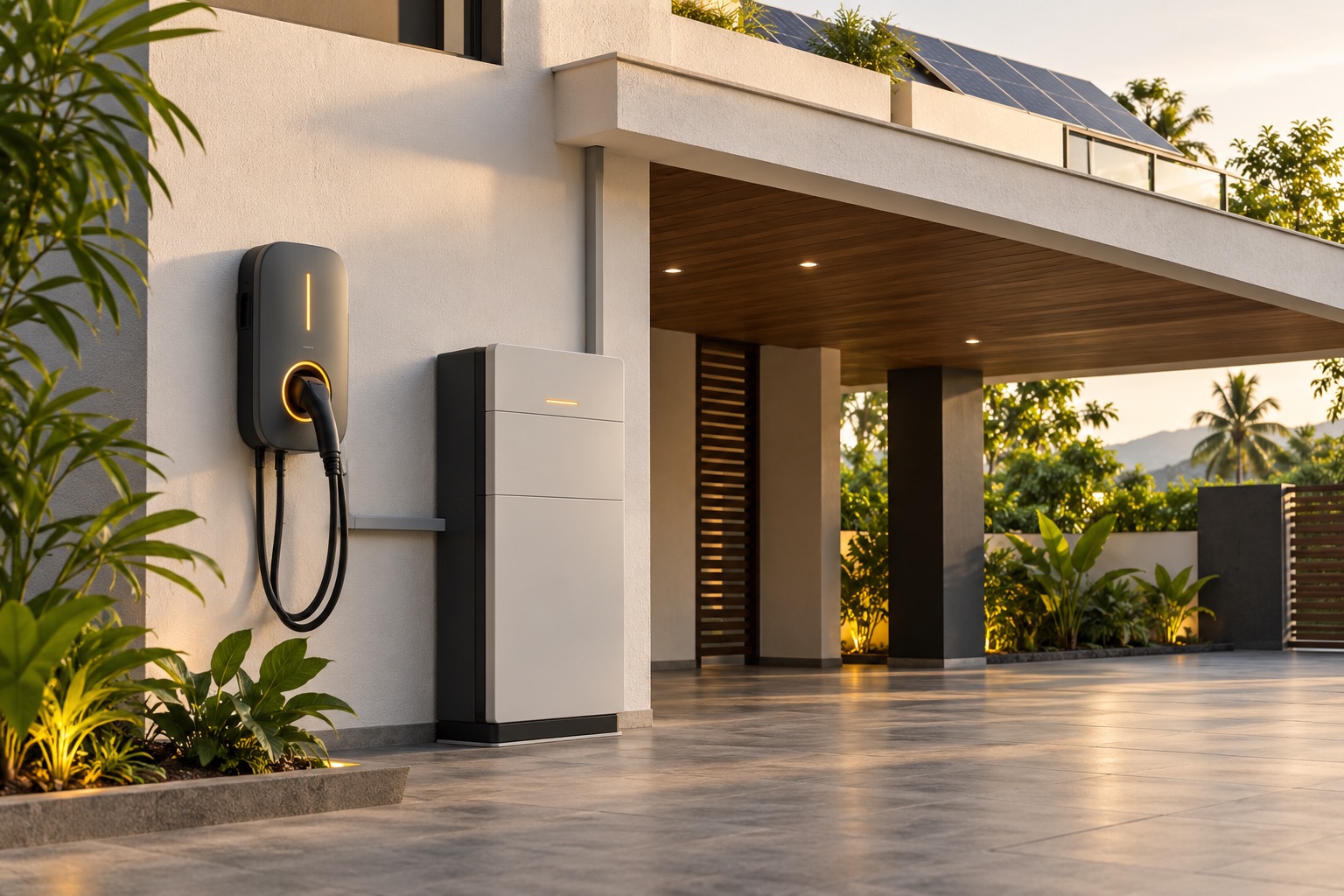
Residential backup planning
Start by separating essential loads from discretionary loads. Lights, fans, refrigeration, connectivity and selected equipment are measured with their starting surge and desired backup duration.
Commercial and industrial storage
Businesses may evaluate storage for resilience, peak management, solar self-consumption or power-quality objectives. Load data and the operating use case are needed before capacity can be recommended.
Technology and integration
Battery chemistry, usable capacity, cycle life, thermal environment, inverter compatibility, safety systems and monitoring all affect system design and ownership cost.
Lifecycle and safety
A proposal should address warranties, replacement planning, enclosure location, ventilation or thermal management, emergency isolation and applicable standards. Storage is not a one-size-fits-all add-on.